An Insurance Company Has Asked Your Digital Forensics Firm to Review a Case for
What is computer forensics?
Figurer forensics is the application of investigation and analysis techniques to gather and preserve evidence from a detail computing device in a manner that is suitable for presentation in a court of police. The goal of estimator forensics is to perform a structured investigation and maintain a documented chain of show to detect out exactly what happened on a computing device and who was responsible for it.
Calculator forensics -- which is sometimes referred to as computer forensic scientific discipline -- essentially is data recovery with legal compliance guidelines to make the information admissible in legal proceedings. The terms digital forensics and cyber forensics are often used every bit synonyms for computer forensics.
Digital forensics starts with the collection of information in a way that maintains its integrity. Investigators and then clarify the data or system to make up one's mind if it was changed, how it was changed and who made the changes. The utilise of computer forensics isn't always tied to a crime. The forensic process is besides used as part of data recovery processes to gather data from a crashed server, failed drive, reformatted operating organization (Bone) or other situation where a system has unexpectedly stopped working.
Why is computer forensics of import?
In the civil and criminal justice organization, computer forensics helps ensure the integrity of digital testify presented in courtroom cases. As computers and other data-collecting devices are used more frequently in every attribute of life, digital bear witness -- and the forensic process used to collect, preserve and investigate information technology -- has become more of import in solving crimes and other legal bug.
The average person never sees much of the information modern devices collect. For case, the computers in cars continually collect data on when a driver brakes, shifts and changes speed without the commuter existence aware. All the same, this information can prove critical in solving a legal matter or a crime, and computer forensics often plays a role in identifying and preserving that information.
Digital show isn't just useful in solving digital-world crimes, such as information theft, network breaches and illicit online transactions. Information technology's as well used to solve physical-world crimes, such every bit burglary, assault, hit-and-run accidents and murder.
Businesses often use a multilayered data direction, data governance and network security strategy to keep proprietary data secure. Having data that's well managed and safe can help streamline the forensic process should that data ever come up under investigation.
Businesses also use reckoner forensics to track information related to a system or network compromise, which can be used to identify and prosecute cyber attackers. Businesses can also employ digital forensic experts and processes to assistance them with information recovery in the event of a system or network failure caused by a natural or other disaster.
As the world becomes more reliant on digital engineering science for the cadre functions of life, cybercrime is rising. As such, calculator forensic specialists no longer accept a monopoly on the field. Meet how the police in the U.Grand. are adopting reckoner forensic techniques to keep up with increasing rates of cybercrime.
Types of estimator forensics
There are various types of computer forensic examinations. Each deals with a specific aspect of data engineering science. Some of the primary types include the following:
- Database forensics. The examination of data contained in databases, both information and related metadata.
- Electronic mail forensics. The recovery and analysis of emails and other information contained in email platforms, such as schedules and contacts.
- Malware forensics. Sifting through lawmaking to identify possible malicious programs and analyzing their payload. Such programs may include Trojan horses, ransomware or various viruses.
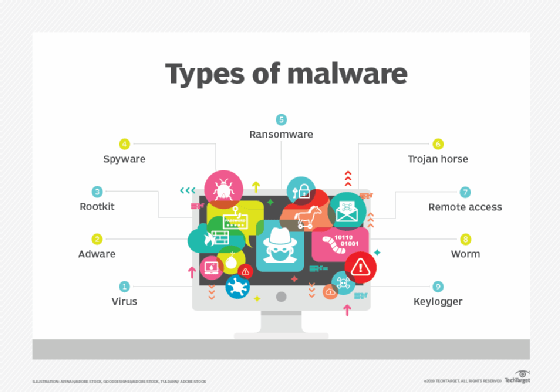
See the full range of malware types businesses must contend with today. - Memory forensics. Collecting information stored in a computer's random access memory (RAM) and enshroud.
- Mobile forensics. The examination of mobile devices to retrieve and analyze the data they comprise, including contacts, incoming and outgoing text letters, pictures and video files.
- Network forensics. Looking for bear witness by monitoring network traffic, using tools such every bit a firewall or intrusion detection system.
How does computer forensics work?
Forensic investigators typically follow standard procedures, which vary depending on the context of the forensic investigation, the device beingness investigated or the information investigators are looking for. In general, these procedures include the following three steps:
- Data collection. Electronically stored information must exist collected in a style that maintains its integrity. This often involves physically isolating the device under investigation to ensure it cannot be accidentally contaminated or tampered with. Examiners brand a digital copy, also called a forensic image, of the device's storage media, and then they lock the original device in a condom or other secure facility to maintain its pristine status. The investigation is conducted on the digital copy. In other cases, publicly bachelor information may be used for forensic purposes, such equally Facebook posts or public Venmo charges for purchasing illegal products or services displayed on the Vicemo website.
- Assay. Investigators analyze digital copies of storage media in a sterile surroundings to get together the information for a instance. Diverse tools are used to assist in this process, including Basis Engineering science'due south Autopsy for difficult bulldoze investigations and the Wireshark network protocol analyzer. A mouse jiggler is useful when examining a reckoner to go along it from falling asleep and losing volatile memory data that is lost when the figurer goes to slumber or loses power.
- Presentation. The forensic investigators present their findings in a legal proceeding, where a estimate or jury uses them to help make up one's mind the result of a lawsuit. In a data recovery situation, forensic investigators nowadays what they were able to recover from a compromised system.
Ofttimes, multiple tools are used in estimator forensic investigations to validate the results they produce. Learn how a researcher at Kaspersky Lab in Asia created an open source forensics tool for remotely collecting malware show without compromising system integrity.
Techniques forensic investigators utilize
Investigators use a diverseness of techniques and proprietary forensic applications to examine the copy they've made of a compromised device. They search subconscious folders and unallocated disk space for copies of deleted, encrypted or damaged files. Any evidence found on the digital copy is carefully documented in a finding report and verified with the original device in preparation for legal proceedings that involve discovery, depositions or actual litigation.
Computer forensic investigations utilize a combination of techniques and expert knowledge. Some common techniques include the post-obit:
- Reverse steganography . Steganography is a common tactic used to hide data inside any type of digital file, message or information stream. Computer forensic experts reverse a steganography attempt past analyzing the data hashing that the file in question contains. If a cybercriminal hides of import data inside an image or other digital file, information technology may look the same before and after to the untrained eye, only the underlying hash or string of information that represents the image volition alter.
- Stochastic forensics. Here, investigators analyze and reconstruct digital activity without the use of digital artifacts. Artifacts are unintended alterations of data that occur from digital processes. Artifacts include clues related to a digital crime, such equally changes to file attributes during data theft. Stochastic forensics is oftentimes used in information alienation investigations where the attacker is thought to be an insider, who might not leave behind digital artifacts.
- Cantankerous-bulldoze analysis. This technique correlates and cross-references data plant on multiple reckoner drives to search for, analyze and preserve data relevant to an investigation. Events that enhance suspicion are compared with data on other drives to wait for similarities and provide context. This is also known every bit anomaly detection.
- Live assay. With this technique, a computer is analyzed from within the Os while the computer or device is running, using system tools on the computer. The assay looks at volatile information, which is ofttimes stored in cache or RAM. Many tools used to extract volatile data require the computer in to be in a forensic lab to maintain the legitimacy of a chain of evidence.
- Deleted file recovery. This technique involves searching a reckoner system and memory for fragments of files that were partially deleted in 1 place but leave traces elsewhere on the motorcar. This is sometimes known equally file carving or data carving.
Find out more about figurer forensic analytics in this chapter from the volume Python Forensics: A Workbench for Inventing and Sharing Digital Forensic Technology, by Chet Hosmer. It shows how to use Python and cybersecurity technology to preserve digital prove .
How is estimator forensics used as evidence?
Computer forensics has been used as show by police force enforcement agencies and in criminal and ceremonious police since the 1980s. Some notable cases include the following:
- Apple trade secret theft. An engineer named Xiaolang Zhang at Apple tree'southward democratic car partitioning announced his retirement and said he would exist moving back to China to take care of his elderly female parent. He told his managing director he planned to work at an electronic car manufacturer in China, raising suspicion. According to a Federal Agency of Investigation (FBI) affidavit, Apple's security team reviewed Zhang'south activity on the company network and establish, in the days prior to his resignation, he downloaded trade secrets from confidential company databases to which he had access. He was indicted by the FBI in 2018.
- Enron. In one of the nigh usually cited accounting fraud scandals, Enron, a U.Due south. free energy, commodities and services company, falsely reported billions of dollars in revenue earlier going broke in 2001, causing financial impairment to many employees and other people who had invested in the company. Computer forensic analysts examined terabytes of data to empathize the complex fraud scheme. The scandal was a significant factor in the passing of the Sarbanes-Oxley Act of 2002, which gear up new accounting compliance requirements for public companies. The company declared bankruptcy in 2001.
- Google trade hush-hush theft. Anthony Scott Levandowski, a former executive of both Uber and Google, was charged with 33 counts of merchandise clandestine theft in 2019. From 2009 to 2016, Levandowski worked in Google'south cocky-driving car program, where he downloaded thousands of files related to the program from a countersign-protected corporate server. He departed from Google and created Otto, a self-driving truck visitor, which Uber bought in 2016, according to The New York Times. Levandowski plead guilty to one count of merchandise secrets theft and was sentenced to 18 months in prison and $851,499 in fines and restitution. Levandowski received a presidential pardon in January 2021.
- Larry Thomas. Thomas shot and killed Rito Llamas-Juarez in 2016 Thomas was afterward convicted with the aid of hundreds of Facebook posts he fabricated under the imitation name of Slaughtaboi Larro. One of the posts included a moving-picture show of him wearing a bracelet that was found at the law-breaking scene.
- Michael Jackson. Investigators used metadata and medical documents from Michael Jackson's md'southward iPhone that showed the physician, Conrad Murray, prescribed lethal amounts of medication to Jackson, who died in 2009.
- Mikayla Munn. Munn drowned her newborn baby in the bathtub of her Manchester University dorm room in 2016. Investigators found Google searches on her computer containing the phrase "at domicile ballgame," which were used to convict her.
Murder is just i of the many types of crime estimator forensics can aid in combating. Learn how forensic fiscal analysis software is used to combat fraud .
Computer forensics careers and certifications
Computer forensics has become its own area of scientific expertise, with accompanying coursework and certification. The average annual salary for an entry-level estimator forensic annotator is nearly $65,000, according to Bacon.com. Some examples of cyber forensic career paths include the following:
- Forensic engineer. These professionals deal with the collection phase of the computer forensic procedure, gathering data and preparing information technology for assay. They help determine how a device failed.
- Forensic accountant. This position deals with crimes involving money laundering and other transactions made to comprehend upwards illegal activity.
- Cybersecurity annotator. This position deals with analyzing data one time it has been collected and drawing insights that tin subsequently exist used to improve an organization'due south cybersecurity strategy.
A bachelor'southward degree -- and, sometimes, a primary's degree -- in estimator scientific discipline, cybersecurity or a related field are required of computer forensic professionals. There are several certifications bachelor in this field, including the following:
- CyberSecurity Institute'south CyberSecurity Forensic Analyst . This credential is designed for security professionals with at least two years of experience. Testing scenarios are based on bodily cases.
- International Association of Computer Investigative Specialists' Certified Forensic Computer Examiner . This programme focuses primarily on validating the skills necessary to ensure business follows established computer forensic guidelines.
- EC-Quango's Calculator Hacking Forensic Investigator . This certification assesses an applicant's ability to identify intruders and collect prove that can be used in court. It covers search and seizure of data systems, working with digital proof and other cyber forensics skills.
- International Guild of Forensic Reckoner Examiners' (ISFCE) Certified Computer Examiner . This forensic examiner plan requires grooming at an authorized bootcamp grooming center, and applicants must sign the ISFCE Lawmaking of Ethics and Professional Responsibility.
Learn more well-nigh a cyber forensics career from this interview with Amanda Rousseau, senior malware researcher at Endgame (now at Facebook), who began her career performing reckoner forensic investigations at the Department of Defense Cyber Criminal offence Center .
This was last updated in May 2021
Go on Reading Nearly figurer forensics (cyber forensics)
- UK courts face up evidence 'black hole' over police EncroChat mass hacking
- 10 leading incident response vendors for 2021
- Cloud computing forensics techniques for bear witness acquisition
Dig Deeper on Threat detection and response
-

electronic discovery (e-discovery or ediscovery)

By: Alexander Gillis
-
![]()
UK courts face prove 'black pigsty' over police EncroChat mass hacking

Past: Beak Goodwin
-
Information security certification guide: Forensics

By: Ed Tittel
-
![]()
Why UK police are learning cyber forensics

By: Alex Bennett
Source: https://www.techtarget.com/searchsecurity/definition/computer-forensics
0 Response to "An Insurance Company Has Asked Your Digital Forensics Firm to Review a Case for"
Post a Comment